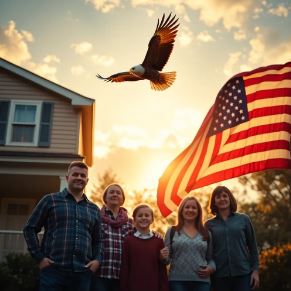
Freedom isn’t free — it’s defended.
On this fifth day of our journey through the core rights our Founding Fathers risked everything for, we stand with a name that still echoes through every town square and history book: Samuel Adams.
Long before the fireworks and parades, Samuel Adams — cousin to John Adams — was already stirring the pot for freedom. He knew that if tyranny could not be reasoned with, it had to be resisted. And to resist tyranny, people needed the right — and the courage — to defend themselves, their families, and their communities.
The Original Agitator
If John Adams was the voice of the Revolution in Congress, Samuel Adams was the heartbeat in the streets. As a brewer, writer, and grassroots organizer, he led protests, rallied neighbors, and helped form the Sons of Liberty — the group that famously threw British tea into Boston Harbor rather than pay unfair taxes.
Samuel believed liberty could not survive if people were defenseless against those who would take it by force. To him, self-defense wasn’t just about weapons — it was about the right of every person to protect their life, home, and freedom when no one else would.
Militias and Minute Men
It was Samuel Adams and men like him who rallied local militias — ordinary farmers and tradesmen who became Minute Men, ready to grab their muskets at a moment’s notice.
It was these same local defenders who stood their ground on Lexington Green and Concord Bridge in April 1775, when British troops tried to seize colonial arms and ammunition. Shots rang out — and a new nation’s fight for freedom began in earnest.
Without the courage to stand armed and ready, there would have been no United States.
Self-Defense Today
Today, the right to self-defense remains as vital as ever. While the weapons have changed, the principle hasn’t: free people must be able to protect themselves — not just from criminals, but from any force that would strip away their freedom.
It’s a right that many take for granted — until they need it. The Founders knew it wasn’t up for debate. They wrote it plainly into the Second Amendment: “…the right of the people to keep and bear Arms, shall not be infringed.”
But the idea goes deeper than guns or militias — it’s about the dignity of being trusted to stand up for yourself, your family, and your community.
Standing Guard in Spirit
Self-defense is not only physical. It’s also moral courage — standing firm when someone tries to bully you into silence, manipulate your choices, or steal your voice.
Samuel Adams faced threats, public ridicule, and constant danger. But he stood firm — and he inspired ordinary people to do the same.
A Call for Today
This Independence Day, remember that freedom stays safe only when good people stand ready to defend it — in spirit, in law, and when necessary, in action.
Self-defense means you have a say when danger knocks. It means your family sleeps safely at night. It means tyrants — big or small — think twice before pushing too far.
May Samuel Adams’ unshakable courage remind us that freedom without the strength to defend it is freedom in name only.
Stand ready. Stand watchful. And stand united — so that tyranny never finds an easy road.
Tomorrow, on Day 6, we’ll lift up another pillar of our Republic — the right to fair representation — and learn from George Wythe, a lesser-known signer who shaped the next generation of leaders to demand, “No taxation without representation!”
To our freedom,
Matt
P.S. Remember Psalm 146: 3-4

 Digital Five L